


 So you’ve finally decided to give yourself or your child the opportunity to learn how to play the piano. Good choice! The amount of benefits that come from taking music lessons is endless, but we can talk about those in another blog. This article will answer some of the common questions we get before someone begins lessons and will also identify the things you need to get the most out of your lessons.
Your first piano lesson should be a very fun and exciting time. You are about to learn how to create music, and most likely this is something you or your child has been expressing interest in. You’re also about to meet your new piano teacher. Hopefully this will be a person you will spend many years learning from and building up a great relationship with.
A few things that you will need before your teacher arrives
If you are taking lessons in your home then the most important thing you will need is a working piano or keyboard. If you have an acoustic piano, its best to have the instrument tuned by a professional piano technician before your teacher arrives. This will make playing on the instrument a lot more enjoyable to listen to. If you are learning on an electronic keyboard, we suggest that the keyboard has at least 61 keys and that all of them are working. Also, the room that the instrument is in should be a quiet place with no interruptions or external noise. This will give you the best chance of keeping your focus on the lesson.
What will I learn at my first lesson?
At your first piano lesson your teacher will assess your current musical skills. Some beginner students have already tried to learn on their own using tutorials or playing by ear, but for the most part, beginner students have no experience whatsoever. Your teacher will go over the very basic techniques about how to play the piano including correct posture, hand position, finger curving and wrist placement. Most teachers will use a method book such as the Alfred or Bastien beginner methods. These books have detailed sequential exercises that help with all of these techniques. An introduction to the keyboard will be given pointing out the patterns that the black and white keys create and of course the introduction of middle C is always an important first lesson staple. After a brief overview of the keyboard, simple rhythms are usually taught. The quarter and half note generally show up during the first lesson and the first few songs learned will be composed of these rhythms. Another important first lesson skill you will learn will be finger numbers. This is so important because it’s something that never changes and will help a lot as you advance in your method book. Depending on the length of your first lesson this is a lot of material to absorb for one week.
What do I do after my first lesson?
When your teacher leaves, you will have an assignment book with detailed notes on exactly what things you need to practice for the week. Generally there is a small amount of writing (theory) that will help you understand musical notation but for the most part you will be getting familiar with the keyboard and setting up your hand and finger positions.
How long until I can see results?
This is a very common question we get. The answer is very simple. That is up you or your child. Practice is the main factor when making improvements at the piano. If a daily practice schedule is set up, then the skills learned at the lessons will improve consistently and progress will be quick. The same goes for not practicing… results will be slow to none if practice is not consistent.
Hopefully this sheds some light on what to expect in the beginning of your piano journey. Remember to practice and have fun!
For piano lessons in your home, visit: http://www.musictoyourhome.com/piano-lessons-nyc/

Memorial Day weekend kicks off the summer, and for some, that officially ends their music lessons. Why? We still can’t figure it out!
The warm weather brings us all outdoors, but when it’s time to cool off, we can send our kids in to watch television, or to practice music. The idea right now of spending another minute indoors seems daunting. But let’s all remember that it does in fact rain during those hot months. And with the sun beating those dangerous rays on us, everyone needs a break. And that’s when practicing an instrument is going to keep the cobwebs out of those growing brains.
With summer also comes no homework, no after-school activities, no big projects and no reading logs to sign off on. So playing music is a great way to help your child keep some of the discipline they’ve maintained throughout the school year. With less distractions from other activities, a child can hone in on the skills they’ve been learning all year without feeling like they need to rush through practicing.
Summer is also a great time to introduce your child to an instrument they’ve expressed interest in playing at school. Their band, chorus or orchestra experience will be so much more rewarding when they are able to keep up with their peers.
Sending your child to sleepaway camp? Pack their instrument and some sheet music. Many camps have talent nights or even “house bands” that kids can participate in.
So just because the mercury has risen, don’t throw away all those hours of hard work. Encourage your child to keep at it and I promise you, one day, they will thank you for it.

Unlike the guitar, saxophone or piano, when it comes to singing, your body IS your instrument. And we all know that taking care of our bodies is not only paramount to living a healthy life but also helps you sing to your full potential. So when it comes to the idea of little kids starting voice lessons there’s a bit of confusion so allow me, someone who started formal singing lessons at 5 years old and with not a nodule in sight, to clear up any misconceptions.
Let’s begin by saying that most likely your 6 year old isn’t chomping at the bit to sing Italian Art Songs. If they are? Cool, we’ll cover that so read on. They probably enjoy singing the soundtrack to the latest Disney hit or Taylor Swift song. Either way, professionally trained voice teachers know that working with voices that haven’t matured yet require tapping into a skill-set and repertoire that accommodate an undeveloped body and mind.
Our philosophy is pretty simple, we think kids playing music, any kind of music, is igniting that part of the brain those newspaper articles are always talking about, so we’ll teach any song a kid wants, and we’ll show them how to sing it in such a way that they are laying the groundwork for correct vocal technique while having fun! Yes, it’s possible!
The first song I learned how to sing was the theme to Sesame Street. My teacher knew I loved it, it was simple, familiar, and I enjoyed practicing it every day. I eventually moved on to show tunes, ran through the Les Miz book, the Rogers & Hammerstein classics, discovered the Tapestry record, was introduced to Italian Arias and opera, fell in love with jazz, all the while rock and folk rested closely in my heart. But the point I’m making is that every genre I sang as I grew up, I was always using proper technique because my teachers recognized the right repertoire to suit my age and growing body.
Kids today have shows like The Voice to inspire them- and that’s amazing, but some of those contestants have no formal training and are actually straining their voices pretty badly. You can hear a lot of them “sitting” on their vocal chords, putting all that tension on the throat where it doesn’t belong. That’s the damaging stuff we are avoiding with proper coaching.
So are we looking to have your six-year old work on their belly breathing and tongue position? We’ll get there over time, but for now that child will enjoy singing their favorite songs while the seeds to formal training are planted. And you can rest easy knowing they’ll be no permanent damage in sight for your young musician.
For in-home singing lessons, visit: http://www.musictoyourhome.com/voice-singing-lessons-nyc/
Image courtesy of sattva at FreeDigitalPhotos.net
Today’s technology is playing a huge part in the way we find, hear, and even learn how to play music. iTunes, Pandora, and Spotify are all great ways for music lovers to listen to music and create diverse playlists, but for music teachers and students looking for opportunities to improve their skills and enhance their lessons, music apps have become very popular. Here’s a list of some cool free music apps that we’ve found to be very helpful and fun to use.

Pro Metronome: The name says it all. This is basically a must have for any professional musician, teacher or student. There are many metronome apps to choose from, but the reason I like this one is that it’s extremely user friendly. The beats are loud and can be heard clearly. Changing tempo and time signature is simple and the app also has a mode for subdividing beats. This will help you learn to keep perfect time anywhere you play or practice.
 piaScore: This is an amazing app for reading scores. It’s like carrying an entire music library in your pocket or bag. The app comes with over 70,000 free scores alone. The scores are extremely clear and easy to see, especially if used with an iPad. Pages can be turned with a simple swipe or gesture. This app comes with several great tools already built in such as a metronome, tuner and a recorder. These are just a few of the neat things this app can do.
 Music Tutor: Here’s a nifty app for improving your note reading in both treble and bass clefs. Identifying notes is made into a timed game. Playing with this app a few times a week will definitely get you memorizing notes on and off the staff and improving your overall reading in a fun way. By incorporating this app into a lesson, teachers are adding technology in a fun way that adds a new dimension to students’ learning and helps keep the lesson fresh and exciting.
 Ear Trainer Lite: This app is an educational tool designed for musicians, music students and anyone interested in improving their musical ear. It has exercises covering intervals, chords and scales. The Lite version comes with 32 exercises while the full version has over 200. Ear training is an essential skill all musicians need to work on and this app will surely help.
 Multi Track Song Recorder: This is a premier 4 track recording app. According to its description, MTSR Pro allows you to record up to 4 tracks with a simple and easy to use interface. It’s designed with a simple tape recording style and includes many features for creative and more advanced music recording. This app allows you to write and record music from anywhere and also lets you export songs via Dropbox, Email, SMS, and iTunes. So basically many of the capabilities of Garage Band except it’s free to all users.

Epic Tune: I’ve probably used this app a thousand times. Its just another handy tool every musician should have. There are plenty of options for tuners out there, but this one is simple to use, accurate and extremely versatile. The tuner is chromatic and can help tune all types of instruments including guitars, woodwinds, violins and pianos. “If it can sustain a tune the epic tuner can tune it”.
These are just a few of the amazing tools being offered for musicians out there today. The best part is they are all free!
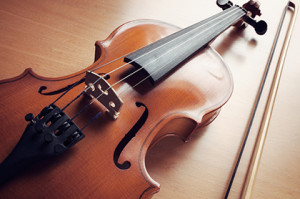
Have you ever listened to an amazing violin piece by Paganini, Beethoven or Mozart and wondered how the violinists got so good that they were able to perform these pieces flawlessly? Well, I can guarantee you that every member in the world’s greatest orchestras has spent thousands of hours taking lessons and practicing their craft. With bands today like Coldplay, Lana Del Rey and Adele using more and more string arrangements in their music, the violin has become a very popular instrument to learn.
So regardless of what style of music you’re interested in playing, all good violinists need to learn the basics like holding the bow and correct posture. These are great beginning points to get you moving onto more advanced techniques like vibrato, double stops and playing in different positions.
To get you started we had one of our expert teachers and NYC Ballet Orchestra violinist Laura Oatts give her top 5 tips for becoming a great violinist.

Laura Oatts, Violinist for the NYC Ballet and MTYH teacher
1) A little goes a long way: Every student should feel that it’s ok to practice only for a few minutes at a time, if that’s what gets them to take out their instrument every day. If you’re terribly busy, several minutes every day will keep building your muscles and help you build up stamina for longer practice sessions. Just playing the open strings or playing a very in tune scale is great practice for a beginner and will help them progress in the future.
2) Love what you’re doing: Love your violin – it’s a beautiful instrument and an amazing work of art to look at and admire. Also, students should constantly be listening to music they love, and learning how to play music they enjoy. Violinists can play both classical and pop melodies, so changing up styles is a good way to keep things interesting.
3) Bowing Technique: Long and full bows on the open strings for 5 or 10 minutes every time you practice. This exercise is for beginner and advanced students and works wonders for both. Always keep your eye on the bow and make sure that it’s staying straight. Keep the bow moving slow and steady the entire time. This can be done on one or two strings. Try to enjoy the vibration of the wood and the ringing of the strings.
4) Practice your pizz: See if you can play your scales or whatever piece you are working on using pizzicato the entire time. By dropping the bow every once in a while, playing pizzicato will help you focus on intonation and other aspects of the music like dynamics and rhythm.
5) Play with a buddy: There’s a new invention called a Bow Buddy, which is available on Amazon and several other music stores. It comes with two pieces, but I prefer the pinky piece. It’s the smaller of the two pieces and goes on the end of the bow and helps students learn to hold the bow correctly while they begin to build the needed hand muscles. It’s a fabulous tool and helps people learn so much quicker in the beginning if they have a “Bow Buddy”.
Hopefully you enjoyed these great tips for beginner students. Keep a look out for our advanced violin tips coming soon!
For lessons, visit our Violin Lessons Page
 5 Reasons Why You Should Play The Piano
If you’ve come across this blog you’re probably already a music lover or someone who’s looking for that one reason to finally start learning an instrument. Here are a few great reasons why you should begin taking piano lessons immediately…
- Playing piano is a major stress reducer: One of the things we hear most from our adult clients is that after a long day at the office, playing the piano at home has a real calming effect on their moods. Playing the piano can refocus your energy and help you become a more creative person. Listening to music can be totally soothing – but the act of performing it can take your mind away from that annoying day at work. Our younger students have experienced the exact same reactions to practicing their instruments. After a day of classes, tests and afterschool activities playing the piano or taking a piano lesson can help relieve anxiety and stress in children as well.
- Playing the piano is good for your brain: Studies have shown that children who begin learning piano at a very young age have better general and spatial cognitive development than children of the same age who have not learned piano. Studying piano can also boost math and reading skills. In addition, taking piano lessons helps with concentration and can therefore improve a students’ overall school performance.
- Playing the piano can help you become a great multitasker: Unlike any other instrument, the piano is unique because you are forced to have two totally different things going on with each hand at the same time. Your brain splits two very complex tasks, (reading treble and bass clefs) between the right and left hand. With practice, putting these tasks together at the same time makes for some really nice music and also trains your brain to focus on several things at once.
- Playing the piano builds self- confidence: We’ve seen this many times with our students. After learning a piece from start to finish even the shyest student will have a feeling of accomplishment. It takes patience, hard work, determination and a love of music to learn the piano and finishing a difficult piece or participating in a performance is a real confidence builder for many people. Performing in recitals at a young age can help students become more comfortable speaking in front large groups and can help make them more confident in social situations.
- Playing the piano is cool: Well it is… Discovering that you have a talent for playing piano is a great feeling. Sitting down and entertaining at a party or social event will always grab people’s attention and can possibly make you more interesting to others. If you’re not sold on this theory just ask a Billy Joel or an Elton John fan!
For in-home lessons, visit our Piano Lessons Page
Image courtesy of sixninepixels at FreeDigitalPhotos.net

Picking the right guitar for a beginner student may be the deciding factor that helps a budding musician make it through the first few months of learning. Some guitars are cumbersome to play and others are either too heavy or look horrible. A new student should feel comfortable and love the look of their first instrument. We have found that if a student likes their new instrument they are more motivated to practice and will become better players in a shorter time.
We asked two of our expert teachers what guitars they choose for themselves and their students. Here’s what they had to say:

For a student model, I recommend the Yamaha Pacifica bundle. Its a great guitar and comes with lots of fun accessories and is well priced. Kids need to love their guitar because when they do, it helps encourage them to practice. Electric guitars are the better choice for beginning guitar players because they are easier to play, there are more styles of music that can be applied to them, and they inspire the student to practice.
For other choices or if the student wants more, I’m partial to Les Paul body style instruments. There are many out there and they are more playable, meaning they fit your body better and afford more progress when learning. My Burr Johnson Model guitar (made by Hagstrom) is based on the Les Paul/336 body style and is a dream to play. The Epiphone Les Paul is also good.
For Jazz and Blues, another great choice is the Gibson 335/347/336 models. They are a larger body size and have “F” hole designs. They are semi hollow body guitars and get a very nice round full sound.

1993 USA Epiphone Riviera – This guitar was built in Nashville as part of a limited USA-made edition of 250 Rivieras and 250 Sheratons in 1993. The production was made very carefully, paying much attention to the Epiphone legacy including the original ‘mini-humbucker’ pickups. This guitar was advertised by Lenny Kravitz when it was first released and also regularly played by – me. 😉
Nashguitar T-Model – The T-model is basically Nashguitar’s version of the Fender Telecaster. I don’t know much detail about it but when I compared an original early 1960s Fender Telecaster to this one I was amazed how much better this one sounded. Brilliant manufacturing and amazing, bright, and powerful Telecaster sound!
Fender Jazzmaster – It seems like there is a revival of this guitar going on for a while now and it’s legitimate: it’s a very versatile guitar with its unique, vast combination possibilities of its single coil pickups and its tone knobs. Just listen to Wilco’s Nels Cline!
Gibson SG – This is AC/DC’s signature sound with its thick and dirty sound – but also the sound of early Cream during Eric Clapton’s very creative musical period. Now combine a normal set of strings on one fretboard with a set of 12-strings on another and you’ll have the famous Led Zeppelin’s Jimmy Page double neck guitar!
At this point I would have to mention the Fender Stratocaster or the Gibson Les Paul, but those need no description as any serious or beginning guitar lover already knows. There are also some rare but possible-to-find great vintage hollow bodies out there from companies like Gretsch, Epiphone, Guild etc. that sound amazing and are also affordable. Keep an open eye to those ones if you enter a guitar shop if you like some beautiful vintage guitar sounds!
All images courtesy of Dan at FreeDigitalPhotos.net

So you’ve wisely decided to schedule your first in home music lesson. What took you so long? While your child is accessing a part of their brain they didn’t even know existed, you’ve been given the gift of time, so make good use of it!
Since you’re used to schlepping all over the city for various activities, here are some helpful hints to prepare you for in-home instruction.
Set aside a well-lit place in your house where the lesson can take place without interruption. A ringing phone, a TV, an oven timer, a conversation in the next room, or a barking dog become little distractions that are hard to ignore, especially when students are working on rhythms and counting. I’m not saying you need to replicate Abbey Road Studios, but you do need to create a nice, quiet comfortable space.
Speaking of dogs, if you own Cujo, please warn us ahead of time. Most of us don’t mind your pets but it’s always great to know what we are walking into.
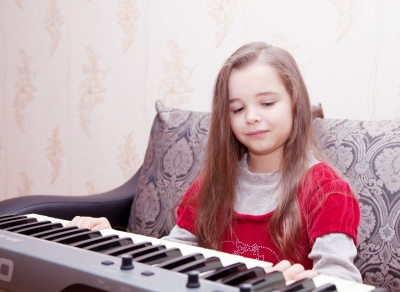
Be ready. I keep a pen, pencil and my kids’ music books on the piano and 5 minutes before the teacher arrives, I ask them to turn on the lights and open their books. Yes, it actually takes my 8-year old twin boys 5 minutes to do that. I also remind them to go the bathroom before the lesson starts!
Have a chair for the teacher, a pen, pencil, metronome, tuner, picks, strings, music stand if needed, extra reeds, extra drum-sticks, and basically any materials required to maintain the particular instrument.
You’re paying for our time and we want to make each and every minute count for you, so make sure as soon as we get there your child is ready to learn and we’ll take care of the rest!
Images courtesy of worradmu & radnatt at FreeDigitalPhotos.net