
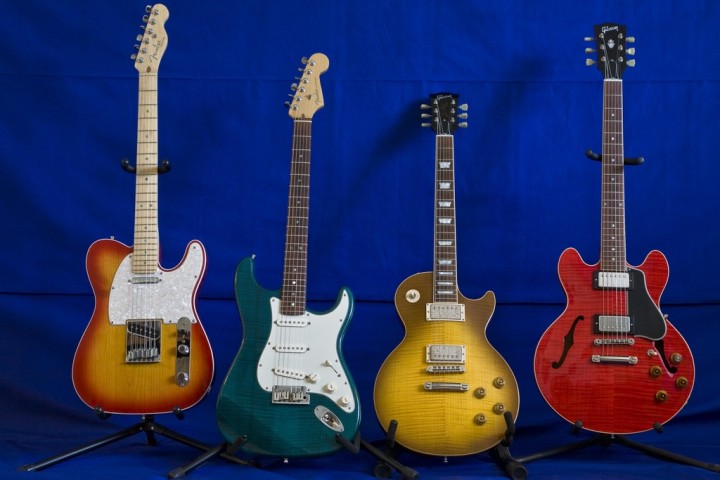
If you live in New York and want to take guitar lessons, it’s probably to learn how to play your favorite songs. Right? But did you know that there are other benefits to guitar lessons? Learning about tonics, quarter notes, rhythm draw on different parts of the brain. A musical instrument can make you an overall better person, giving you and those around you greater happiness. Don’t believe me? Read on.
Tonics
Like most studies, music has its own specific vocabulary. For example, a scale is made up of individual notes, or degrees. The first degree is the tonic, also known as the tonal resolution. In a C scale for example, the tonic is C. Based on a note’s distance from its tonic, it will sound good or bad. The fifth note is known as a dominant, and is second in importance to the tonic. When you move from any tonic to that tonic’s dominant note, it will always sound good. In a C scale, the dominant note is G. In a D scale, the dominant note is A. On guitar, a C chord is composed of a tonic note, dominant note, and mediant note, the third note in a scale, in this case an E. Therefore, in relation to any tonic, the third and fifth notes will always sound good. Figuring out which notes work for which tonic is an exercise in math.
Quarter Notes
A quarter note is one quarter of a whole note. While some musicians refer to a quarter note as a beat, this isn’t always the case, since a beat depends on the time signature. For example, any time the signature is other than 4/4, a quarter note is not a beat. There are also eighth notes, sixteenth notes, even 32nd notes, if you’re playing a gnarly guitar solo.
Rhythm
Get rhythm, when you get the blues. I.e., dance. According to Wikipedia, rhythm is a “movement marked by the regulated succession of strong and weak elements, or of opposite or different conditions.” In terms of guitar lessons, I think of rhythm when I think of strum pattern. Up down down up, down up down up, up up down, the variations are many.
When I took guitar lessons in NYC, my teacher would tell me to open up every practice session with five minutes on chord changes, five minutes on scales, and five minutes on strum patterns before moving into the meat of my practice. With that in mind, I would try to focus on strum rhythm by playing with a metronome. This can also help the timing of scales and chord changes and will make you feel more comfortable playing in front of people and with others if you want to join a band one day.
Music may not make you smarter, but it definitely doesn’t make you dumber. If you’ve ever felt tears in your eyes or gotten chills while listening to music, you know its power. Feeling down and being able to play your favorite song is a sure-fire way to forget your problems. When it comes down to it, learning how to play an instrument is part of what makes someone well-rounded, no matter if you’re covering music theory or trying to dance to a beat.

For time immemorial humans have classified music as one style or another. But it wasn’t until the second half of the 20th century that pop culture led to a proliferation of musical genres. Today, if we look at a genre like Electronic Dance Music, its sub-genres are so extensive that there is an entire Wikipedia page dedicated to the many different types, from ambient dub to UK funky. Not only do these different sub-genres sound different, but they inspire different kinds of crowds at concerts, with different activities typically associated with their music.
At a certain point, though, we have to wonder. Are these genres really worth of differentiation? Do kids taking guitar lessons really want to grow up to play Nu-gaze? Maybe. But it’s more likely that the media and record labels put adjectives on bands and artists in order to define and sell their music.
Genre as a Rule, and an Exception
That said, there are other bands who take a genre and completely own it, becoming representative of that kind of music. What would Heavy Metal be without Metallica, or Chillwave without Washed Out? Some of the best bands upend a genre by starting out as representing their genre, only to add more to their repertoire as they grow artistically. The result is that these bands expand the boundaries of what kind of music they (and their associated genre) can create and represent.
In this sense, genre can be a starting point, especially for young artists entering their first band, or taking more advanced lessons in NYC. Say, if you want to specialize in playing blues guitar, playing blues scales is a great way to begin. If you’re truly serious about being a blues guitarist and you find yourself in a band, releasing albums, there may come a point where you define your music based on what you perceive as the limits of the genre of blues, which to others may be far outside what they had previously considered representative of a style associated with pentatonic scales. But ultimately that’s what it means to be an artist—to expand boundaries and present different viewpoints. So keep playing, and don’t let genre dictate what kind of music you play, unless, of course, you’re just starting and you need a marker to begin.

So you’ve been taking lessons on the guitar for a few months now, and you’re finally starting to get the hang of things. You practice regularly, you’re careful about your technique, maybe you’ve even convinced your instructor to let you learn a few of your favorite songs.
However, there’s always an aspect to any instrument that nobody tells you about and you have to learn on your own. Here’s a few quick tips that will help you see drastic improvements.
1. Change you guitar strings regularly
Those strings get worn down from all that guitar shredding. Some people swear by changing the strings once a month, but if you manage to change them out once every 3 months or so, you should be fine. Learn how to do it yourself (it’s easier than you think!).
2. Warm up before you play!
Just like runners need to stretch before they hit the pavement, you should be warming up your fingers before you delve into your daily rundown of guitar solos. Go through chord progressions over and over to get your fingers loosened. My guitar teacher used to take the first 20 minutes of class warming up with chord progressions. Sometimes I wanted to hit him over the head with my guitar because of it. Now, I realize the value in it when I can stretch my fingers to hit the high notes.

3. Get some musical background
How can you expect to ever be an expert at something if you don’t know the basic knowledge behind it? Taking some music theory courses or reading some music history books will transform you from guitarist to musician. It’s going to take a while to get the ins and outs of it, but once you start to truly understand music, you won’t just be playing songs anymore.

4. Let other people hear you
I get it, playing in front of other people can be scary. Playing WITH other people can be even scarier. However, anyone who plays an instrument knows that everyone is always at different skill levels. Let people know you’re learning and are just looking ot jam, and get feedback from those who are willing to listen to you play. That is why you’re taking guitar lessons in the first place, right? So people can hear your wonderful music? Then get out there and share some tunes with the world!

5. Record yourself
Sometimes you just need to hear it for yourself. You can’t really know how you’re sounding if you’re focused too much on just trying to get through the song. Record yourself and play it back. It will be very enlightening. You can gauge if you speed up when you play (most of us do), how smooth your transitions are, if you’re playing the song the way you think you are in your head. Nothing helps improvement like personal insight.
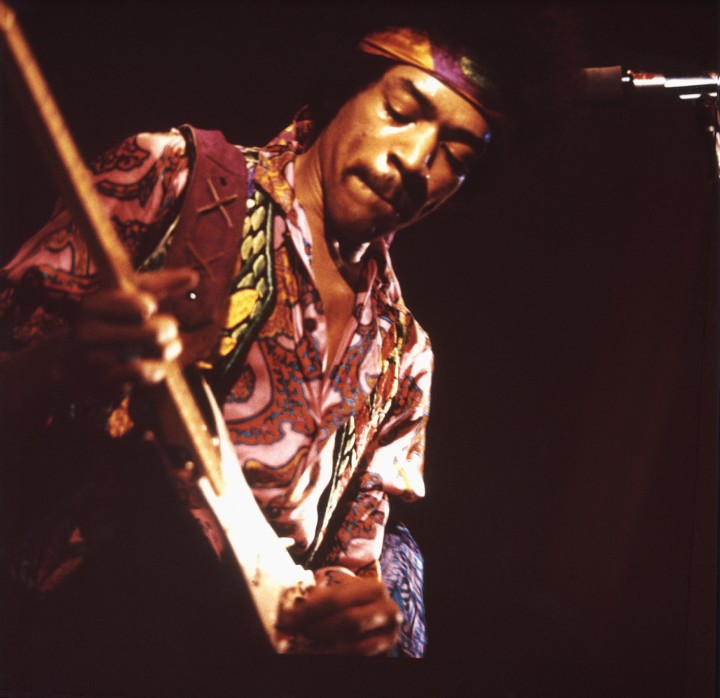

Getting guitar training is the first step in becoming a guitar god. Well, after you buy a guitar. The next part, the key to getting really good at guitar, is practice. Guitar lessons offer a mentor and way to stay on track. Think of each lesson as a weekly test that will keep you determined to impress your teacher. Your guitar lesson instructor can correct any mistakes you may be making, and challenge you to learn harder songs and techniques. After that hour of guitar lessons, it’s on you to love your instrument and play every day, to prepare for next week.
Guitar Gods of the Past
To give you an idea of how past guitar gods have made reached the pantheon, look at Eddie Van Halen. He used to strap his guitar around his neck and sit on his bed playing for hours at a time. When other kids were going out to party, he was practicing. That’s dedication. Eventually he become one of the world’s greatest.
NYC guitar lessons are super helpful when you have questions about technique, when you think you’re doing something wrong, or when you want to learn a new song or style of playing. Sometimes playing really slowly, making sure you hit all the right notes, or making sure that your strum pattern is perfect and everything else is right is the best way to practice by yourself. Listening to your favorite guitar solos can inspire you to learn them, bringing out your love for music even more and making it easy to practice guitar for half an hour a day. You can find tabs for solos and your favorite songs online. Also try to listen to classical music, to appreciate the foundation for awesome riffs and sick solos. Eddie Van Halen was a student of classical piano before he ever picked up a guitar. Reading music can help too.
Different (Guitar) Strokes
Stevie Ray Vaughan—a blues guitar god—didn’t know how to read sheet music. Then again, he also had cocaine and whiskey for breakfast during his later years—not exactly a role model. Some guitar gods reach their status through a natural amount of talent. Music theory is also important, and because of its difficulty, it’s a great subject to explore with your mentor during guitar lessons.
http://youtu.be/OEJh2FFUUoU
Another guitar great who played as much as he could was Jimi Hendrix. He couldn’t afford guitar lessons, since he was so poor growing up in Seattle, so he took guitar lessons from blues masters. Jimi is perhaps best known for how he used distortion so originally. He was also famous for doing crazy tricks while performing, like biting and smashing his guitar. Some people say that he was sloppy, that he would take tabs of acid and put them in his headband, so that while he performed his pores opened and he became high. But one night he was challenged to play sober, and he played the same way to a standing ovation. Because his hands were so big, he was able to use his thumb over the fretboard to fret the lower E string, thereby creating melodies that are otherwise difficult or impossible to play. Though this technique existed before Jimi, in the early days of blues guitar, it was probably he who popularized it.
Guitar Lessons are Still Your Best Bet
Keep in mind that a lot of the guitar gods who didn’t take guitar lessons were troubled souls who often died young. Who knows—maybe it was easier for them to follow a path of destruction without a guitar mentor to guide them along the way.

Private lessons on the guitar are fun because you can play covers of a lot of songs. It makes practice a lot easier when you like the music you’re playing. If you it’s rock ‘n’ roll you want to play, The Rolling Stones, Bob Dylan, and Elvis have songs that you won’t need many guitar lessons to play.
Early guitar lessons
The guitar has been around for a long time, in different incarnations. From the lute to the electric, there are many different styles of guitar and guitar playing. Our guitar teachers know them all, from finger-picking to flamenco, and they also know, from the first few notes or chords you play, how much you’ve practiced in the week since your last lesson. Half an hour a day is a good start for most beginners.
Guitar lessons begin with the basics of how to hold the instrument and how to strum. Keeping time is one of the most difficult parts of playing guitar, especially when you don’t know how to read music. This is where it really helps to have guitar lessons, because it is difficult and often frustrating to work with a metronome to get your playing to sound really good. It’s kind of like singing and hearing how you sound, which if you want to play rock music, is closely tied to guitar lessons—how you hear yourself is not how everyone else hears you. That’s why it’s nice to have a guitar instructor guide you to play properly, in terms of timing, strumming and fingering, the same way you might be encouraged to sing higher or lower to be more in tune with the song you’re playing.
Playing guitar like Slash
This is a process, as is learning the chords that make up a lot of simple songs. Many famous songs are easier than you thought—”Free Falling,” by Tom Petty, “Knocking on Heaven’s Door,” either the Guns ‘n’ Roses version or the Bob Dylan version, and “I Should Have Known Better,” by the Beatles. The easy songs are mostly three chords and after a few lessons in your New York City home, you will be able to play them!
All the greatest guitarists in modern history became so good thanks to practicing a huge amount. Slash, from Guns ‘n’ Roses, used to practice 12 hours a day, dropping out of high school to pursue his dream. Rumor has it that Jimi Hendrix used to play until his fingers bled. Not all of us can do that, though, which is why if you live in New York or New Jersey it’s so important to have lessons.

Music isn’t rocket science.
That said, it’s not exactly something you can pick up and learn in a few weeks. It takes studying. It takes dedication. It takes lots and lots of practice.
Have you ever wanted to learn an instrument, but keep putting it off because the time isn’t right? Do you have a son or daughter who you want to teach discipline and self-motivation to? Do you just want to impress all your coworkers at the next holiday party with your incredible oboe skills? (Maybe not…)
Guitar and Piano Lessons are just the beginning
The first step is getting your hands on an instrument, but learning to play goes beyond that, too. You need to understand music as a culture. The different genres, the major players, the major news in the industry, any information you can get your hands on. The more you know, the better equipped you’ll be to become a master of your craft.
That’s what we’re here for. We want you to learn with us in real life and in virtual life. Taking piano lessons is a great stepping-stone, but if you want to hear live jazz on a random weeknight, where can you go?
When the music instructor leaves your place, you should have an outlet to continue honing the skills you were taught and learning more about those not yet covered.
The Internet is an absolutely amazing resource, and a great tool if you ever get stuck on a particularly difficult part of a song. For example, check out this guy who will teach you how to write a melody that goes with a chorus. This comes with the caveat that watching Youtube videos is NOT a substitute for live, in-person lessons. Youtube is a great resource to expand your musical knowledge, but you can’t interact with Youtube the way you can with an instructor.
Or this little girl absolutely killing it on the guitar. If you ever need inspiration to practice, take this girl’s video to heart.
The Internet is a place where you can take what you’ve learned and find the resources for real life application. Combined with the NYC guitar lessons or piano lessons you’re taking, it’s like having thousands of teachers at your fingertips.
Make music your best friend
Don’t let the learning stop when the lesson ends.
At Music to Your Home, we’re obsessed with music. We’re so obsessed with it we’ve made it our livelihood, and we want you to get obsessed with it, too. There’s more than enough blogs out there addressing things like music reviews, or where to catch some great live music. However, if you want a music outlet you can trust, while still learning the craft, then we’re the place for you.
Check back here a few times a week to see what we’re cooking up, be sure to follow us here on Twitter: https://twitter.com/musictoyourhome, and here on Facebook: www.facebook.com/musictoyourhome, so you’re always up on the latest news. If you’re looking for inspiration to finally learn the ins and outs of music, this is the place to start.
Just take that first step.