
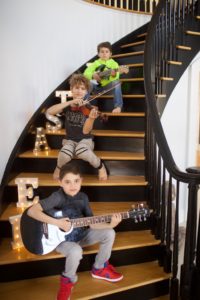
 Many people ask us “what is the best age to start learning music?” Honestly? The answer varies from person to person.
We currently teach in home music lessons to students of all ages, ranging from two years old to senior citizens. Learning music is like learning another language and many studies show that the earlier children are exposed to a new language, the easier it will be for them to learn it.
Each student is different so what might work for your three year old might not work with another child the same age. Here are some questions to ask yourself before deciding to enroll your child in lessons:
Does he/she express an interest in music? If not, it doesn’t necessarily mean they aren’t ready, but if you have a child who really responds to music, through dancing clapping, even banging in the table, that’s a sign that it’s time to channel that excitement into one on one music lessons. A teacher can show them how to clap on beat sing songs, explore different percussion instruments and start to identify basic note reading and rhythmic patterns.
Do you notice your child constantly playing on your piano? Do they gravitate towards other instruments? If you start noodling on your guitar, are they at your feet either listening or attempting to strum some chords? Those are pretty good indications that they might really benefit from more structured music lessons.
Five years old is an optimal age to begin lessons. At that point, children are usually pretty good at being able to sit and focus with a music teacher in their home. But if you have a curious four or even three year old who you know has the attention span for a music lesson, by all means, give it a try!
How about adults? Here’s our rule of thumb, just do it! The only criteria for learning music as an adult is the desire to go for it. One of our talented teachers will take care of the rest, right in your home.
 With many of our piano students living in NYC, I thought it would be useful to talk about finding the right instrument for your city apartment or home. For many of our clients finding enough space for a full size piano can be a real challenge. Here are our recommendations for pianos that will fit in tight spaces.
- The Williams Allegro Hammer Action Digital Piano: This is a great piano for extremely small spaces. It’s a digital piano so it’s lightweight and easy to move. It can also be put away whenever extra space is needed. I have played this piano and can say that for an entry level keyboard its sounds are very rich and the hammer action of the keys is excellent for an entry level digital piano. Make sure you buy a keyboard stand and have a stool of appropriate height for practice time. The other advantage is that you can plug headphones into it for late night practice sessions.
- Essex EUP-108C: Let’s talk about acoustic pianos… Whether you are a professional pianist or a child taking piano lessons for the first time, there is nothing like playing on a real acoustic piano. This Essex model piano is one of the most compact and well-made instruments I have seen. The piano is affordable, well designed, plays well and sounds excellent. I had the pleasure of playing one recently and for such a small piano the sound is very big. This piano can fit into very small spaces and as far as pianos go, its super lightweight so it’s easy to move around if you have to. The piano also has a very stylish look that will fit well into any Upper East Side or Tribeca apartment. The best part about this piano is that it’s made by Steinway and Sons so it has all the latest engineering enhancements from their amazing development team at a fraction of the cost of an actual Steinway. This is definitely a great instrument for beginner piano lessons.
- Boston UP-118E PE: Here’s another great little piano. This one is slightly larger than the Essex but still small enough to fit into almost any room. The design of this instrument is definitely more traditional but the sound and performance is just as good – if not better than the Essex. Also made by Steinway, you are getting the same standards that has made that company famous for many years. Although this piano has a small footprint it is definitely a little heavier than the Essex so moving it around is slightly trickier. Any beginner student or professional would be very happy to own one of these instruments even if space was not an issue.
- Yamaha M560: This is a really nice piano. It’s definitely compact, so for apartments or small rooms it’s a great instrument. It’s really well made, sounds excellent and in my experience Yamaha pianos are real workhorses and can take a lot of abuse. It has a different sound than the Essex and Boston but all 3 are great when it comes to that experience. The design is very traditional and somewhat ornate. It’s not my favorite piano ascetically but a great instrument nonetheless. The Yamaha is close in size to the Boston but will still fit nicely where space is limited.
- Steinway 4510 Sheraton: This is my personal favorite of the small pianos. It’s actually smaller than the Yamaha but in my opinion has a bigger sound. It’s also super cool looking and will basically match any décor your home or apartment has. You can use this for beginner piano lessons in your home or it can be used professionally in the world’s best recording studios. It’s compact but maintains that authentic Steinway and Sons sound. The action on this piano is super quick for an upright as well. It’s also handcrafted in the same factory that Steinway grand pianos are made using the same process and craftsmanship. When you sit down and play this you can see it’s solid, sturdy and well-built but extremely artistic and visually appeasing at the same time. You can tell something extra went into this design. If I were learning how to play the piano this instrument would definitely keep me motivated to practice and constantly create.
If you’re someone who is looking for a piano in NYC or anywhere else and have limited space these are my top choices. Choosing the right piano can absolutely make a difference in how you play, practice, learn and create music. These are all winners in my opinion.
Image courtesy of Rawich at FreeDigitalPhotos.net
 One of our favorite NYC piano teachers, Rita R. answered some often asked and important questions about piano lessons, her teaching philosohpy and favorite musical moments.


 So you’ve finally decided to give yourself or your child the opportunity to learn how to play the piano. Good choice! The amount of benefits that come from taking music lessons is endless, but we can talk about those in another blog. This article will answer some of the common questions we get before someone begins lessons and will also identify the things you need to get the most out of your lessons.
Your first piano lesson should be a very fun and exciting time. You are about to learn how to create music, and most likely this is something you or your child has been expressing interest in. You’re also about to meet your new piano teacher. Hopefully this will be a person you will spend many years learning from and building up a great relationship with.
A few things that you will need before your teacher arrives
If you are taking lessons in your home then the most important thing you will need is a working piano or keyboard. If you have an acoustic piano, its best to have the instrument tuned by a professional piano technician before your teacher arrives. This will make playing on the instrument a lot more enjoyable to listen to. If you are learning on an electronic keyboard, we suggest that the keyboard has at least 61 keys and that all of them are working. Also, the room that the instrument is in should be a quiet place with no interruptions or external noise. This will give you the best chance of keeping your focus on the lesson.
What will I learn at my first lesson?
At your first piano lesson your teacher will assess your current musical skills. Some beginner students have already tried to learn on their own using tutorials or playing by ear, but for the most part, beginner students have no experience whatsoever. Your teacher will go over the very basic techniques about how to play the piano including correct posture, hand position, finger curving and wrist placement. Most teachers will use a method book such as the Alfred or Bastien beginner methods. These books have detailed sequential exercises that help with all of these techniques. An introduction to the keyboard will be given pointing out the patterns that the black and white keys create and of course the introduction of middle C is always an important first lesson staple. After a brief overview of the keyboard, simple rhythms are usually taught. The quarter and half note generally show up during the first lesson and the first few songs learned will be composed of these rhythms. Another important first lesson skill you will learn will be finger numbers. This is so important because it’s something that never changes and will help a lot as you advance in your method book. Depending on the length of your first lesson this is a lot of material to absorb for one week.
What do I do after my first lesson?
When your teacher leaves, you will have an assignment book with detailed notes on exactly what things you need to practice for the week. Generally there is a small amount of writing (theory) that will help you understand musical notation but for the most part you will be getting familiar with the keyboard and setting up your hand and finger positions.
How long until I can see results?
This is a very common question we get. The answer is very simple. That is up you or your child. Practice is the main factor when making improvements at the piano. If a daily practice schedule is set up, then the skills learned at the lessons will improve consistently and progress will be quick. The same goes for not practicing… results will be slow to none if practice is not consistent.
Hopefully this sheds some light on what to expect in the beginning of your piano journey. Remember to practice and have fun!
For piano lessons in your home, visit: http://www.musictoyourhome.com/piano-lessons-nyc/
 5 Reasons Why You Should Play The Piano
If you’ve come across this blog you’re probably already a music lover or someone who’s looking for that one reason to finally start learning an instrument. Here are a few great reasons why you should begin taking piano lessons immediately…
- Playing piano is a major stress reducer: One of the things we hear most from our adult clients is that after a long day at the office, playing the piano at home has a real calming effect on their moods. Playing the piano can refocus your energy and help you become a more creative person. Listening to music can be totally soothing – but the act of performing it can take your mind away from that annoying day at work. Our younger students have experienced the exact same reactions to practicing their instruments. After a day of classes, tests and afterschool activities playing the piano or taking a piano lesson can help relieve anxiety and stress in children as well.
- Playing the piano is good for your brain: Studies have shown that children who begin learning piano at a very young age have better general and spatial cognitive development than children of the same age who have not learned piano. Studying piano can also boost math and reading skills. In addition, taking piano lessons helps with concentration and can therefore improve a students’ overall school performance.
- Playing the piano can help you become a great multitasker: Unlike any other instrument, the piano is unique because you are forced to have two totally different things going on with each hand at the same time. Your brain splits two very complex tasks, (reading treble and bass clefs) between the right and left hand. With practice, putting these tasks together at the same time makes for some really nice music and also trains your brain to focus on several things at once.
- Playing the piano builds self- confidence: We’ve seen this many times with our students. After learning a piece from start to finish even the shyest student will have a feeling of accomplishment. It takes patience, hard work, determination and a love of music to learn the piano and finishing a difficult piece or participating in a performance is a real confidence builder for many people. Performing in recitals at a young age can help students become more comfortable speaking in front large groups and can help make them more confident in social situations.
- Playing the piano is cool: Well it is… Discovering that you have a talent for playing piano is a great feeling. Sitting down and entertaining at a party or social event will always grab people’s attention and can possibly make you more interesting to others. If you’re not sold on this theory just ask a Billy Joel or an Elton John fan!
For in-home lessons, visit our Piano Lessons Page
Image courtesy of sixninepixels at FreeDigitalPhotos.net

Guess what? I have two seven-year old boys and they both want to quit their piano lessons! And I own Music to Your Home. So am I going to let them? The easy answer would be yes. They can quit. And then they can play on their ipods and computer and watch You Tube videos of kids skateboarding.
But I won’t give in. Because in my eyes that means I’ve quit piano lessons. Twice, really, if you take into account the twin thing.
So how do I get them to enjoy what they’re doing? First of all, I inspire them. I play music they love and point out the piano parts. We really listen for them, and I remind them that one day they can learn those parts. But first they need to study the basics. Once they have that down, they can branch out into any music they want.
Kids also need a goal. We all know when a child has a target, usually they will work twice as hard to achieve it. So what could a goal be? Well, for one, a recital. There’s a ton of merit that comes along with playing on a stage in front of a group of people. It’s difficult and scary, but participating in a performance is an unbelievable confidence builder, not to mention a proud moment for any parent.
Another goal? To impress people! Seems shallow and simple, but I saw my son play piano for a girl at a play date. I reminded him that without those piano lessons – that would not have been possible. My husband is a pianist and I’m a singer. We met in high school because we were both musicians. So there’s that!
Signing your kids up for piano lessons means you’re signing yourself up for piano lessons. You are also making the commitment, albeit you can cook dinner while they practice, but you’re still involved. You’re listening. Applauding when they get it right. Appreciating that your child is learning a skill that could potentially last a lifetime. So when your kid quits, you are also quitting. So stick with those piano lessons. For their sake, and yours.
 Playing the piano is a skill that takes years of practice, dedication, and desire. Our students study every type of music during their piano lessons including classical, jazz and pop music. If you are just getting started with your piano lessons and are looking for some instant gratification, here are some easy rock songs to get you ripping up the keys in no time!
1) “Let It Be” by the Beatles
http://www.youtube.com/watch?v=pJUrZsFFrVg
Everyone knows and loves this one. This song has 4 chords that you can play. Learning this tune is a rite of passage for every budding piano player.
2) “Werewolves of London” by Warren Zevon
Here’s an easy piece to play and fun to sing along with. There are a few simple chords and once you learn it you’ll be playing one of rock’s most iconic piano licks!
3) “Sweet Home Alabama” by Lynyrd Skynyrd
Well – you’d be wise to avoid this song if you’re hanging out with Neil Young, but do play it if you want to impress your southern friends. It’s another iconic piano riff that’s easy enough to play.
4) “Hey Jude” by the Beatles
http://www.youtube.com/watch?v=Hla6jdmkY4I
Yep, another Beatles song, but are you surprised? It’s easy, it’s awesome, and one of their biggest hits. Play this tune at a party and enjoy your rockstar moment.
5) Home Sweet Home by Motley Crue
This is great piano riff that was written by Crue drummer Tommy Lee. Learn how to play this and you might be able to date Pamela Anderson….
Well, here are five classic and easy songs to get you started on your musical journey, but don’t forget to keep practicing. Rock on!
Are You In The New York City Area?
Learn these 5 songs by a professional teacher. Sign up for our Piano Lessons today!

Practicing is the hardest part about playing piano. But if you don’t practice, it’s pretty obvious, and your music lessons just don’t go as well when your teacher can tell that you don’t care. In my experience, I’m most excited to practice when I can get excited about what I’m playing. Beethoven’s Fifth, for example, is probably one of the most awesome pieces of music in the history of the world. In fact, the seventy-five minutes it takes to play the Fifth were what inspired the length of CDs. If you were working to play that during your piano lessons, how could you not be excited about practicing?
Watch how this guy does it:
Beethoven’s Fifth Symphony
When the Fifth was originally performed in 1808, it was not a critical success. The orchestra played so poorly that Beethoven apparently had to stop the performance! Granted, the orchestra had only had one rehearsal, but the cold auditorium and the length of the performance, a four hour long concert during which the Sixth Symphony was played first and the Fifth during the second half, made the audience even less responsive. A year and a half later, a review of the published Fifth appeared in which it called the piece one of the most important works of music of the time. The time being during Napoleon’s occupation of Vienna. Supposedly, the famous first four notes represent Fate knocking on a door. How cool is that?
The Fifth Symphony’s Impact
Needless to say, Beethoven has been revered through all stages of rock ‘n’ roll, from “Roll Over Beethoven” by Chuck Berry, to “A Fifth of Beethoven,” the classic disco tune from “Saturday Night Fever.” To really get excited about your piano classes, it’s best to play something you recognize, and when you choose to play Beethoven’s Fifth, you’re choosing one of the most recognizable pieces of music the world has ever known.